
 How and what to use to clean mirrors properly – Pro Tips
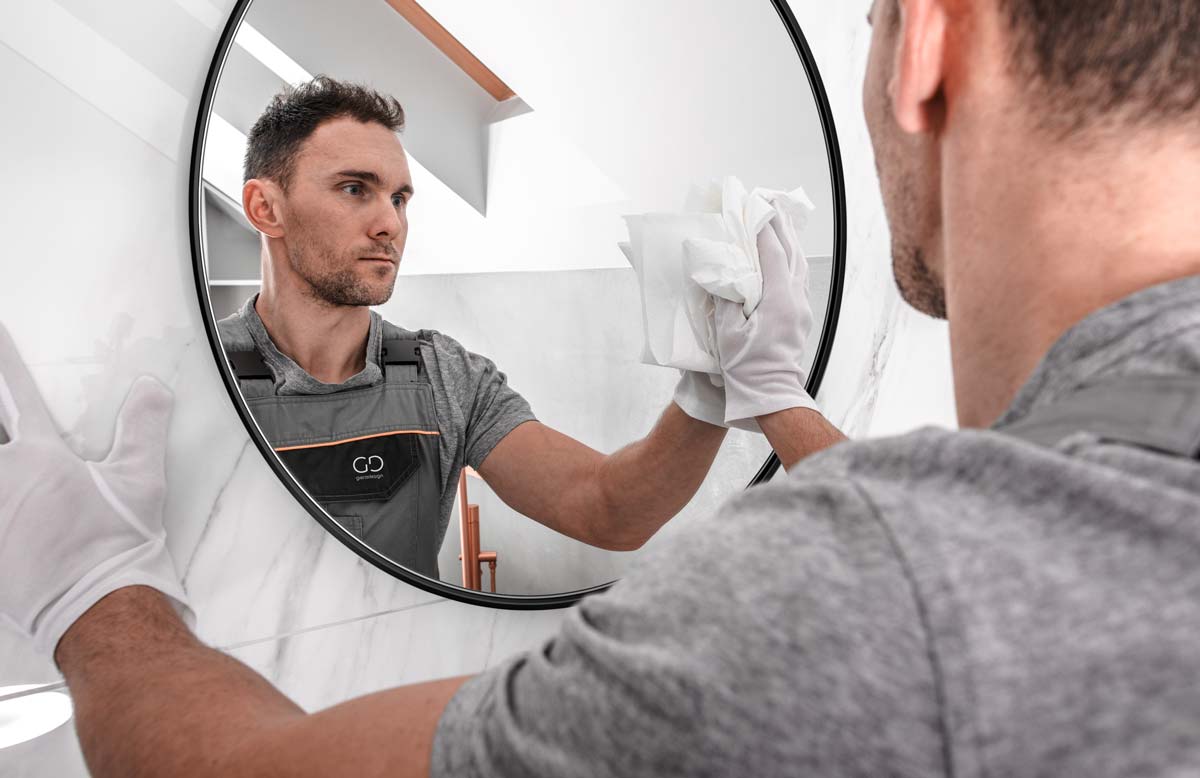

In this article, you will find answers to the following questions
- How do you clean a mirror?
- Can you use water with vinegar to clean a mirror?
- What is the best product for cleaning mirrors?
- How do you remove stains and tough dirt from a mirror?
- What can you use to clean a mirror without leaving streaks?
This is one of the most frequently asked questions about mirrors. Unfortunately, most online advice is unprofessional and repeats harmful methods that can damage this delicate item. Learn from professionals how to properly care for your mirror.


Our expert: Aleksandra Giera / GieraDesign
A perfectly clean mirror is not only a functional object but also a decorative feature. When cleverly placed, it can brighten a space or create the impression of an additional window. However, this effect is ruined if the mirror is dirty.
Why is cleaning mirrors so tricky?
Cleaning a mirror seems simple, but it often causes problems. How do you remove dried-on dirt without scratching the glass? What cleaning products are safe for the silver layer? How do you clean it without leaving streaks? These are common concerns. This article offers real solutions.
Can you clean a mirror the same way as a window?
This is a key question because cleaning a mirror is not the same as cleaning glass! A mirror is not just a glass pane—it has a silver coating on the back that turns it into a reflective surface. Though protected by a backing layer, the mirror’s edge—especially after cutting and even when polished—exposes the silver. Contact with active substances can lead to a reaction that causes dark, unsightly spots. Additionally, using inappropriate cleaning agents can damage the backing layer, leading to corrosion.

Using improper products can damage the mirror. When excess liquid seeps into gaps or remains on the edge, the silver layer corrodes, leaving stains.
Which cleaning products should be avoided?
According to mirror glass manufacturers, avoid cleaners with strong acidic or alkaline pH. These damage the backing and cause silver corrosion, especially if droplets sit on the edge for too long. Such substances include:
Water with vinegar
All vinegars, including glass cleaners with vinegar, are harmful. Their strong acidity can damage the backing and cause dark spots at the edges. For the same reason, never use silicone or adhesives containing acetates to install mirrors.
Water with ammonia:
Ammonia solution has a high pH and is highly alkaline. It's another harmful substance. Glass manufacturers warn against its use, even threatening to void warranties.
Cream cleaners
Avoid gritty products like bathroom creams or abrasives. These can deeply scratch the glass. Also avoid scouring pads or rough sponges.

Don't be misled by marketing on glass and mirror cleaners. Avoid any containing vinegar, ammonia, or citric acid. While these may work for windows, they are not suitable for mirrors! Also steer clear of chemically aggressive substances—solvents like acetone, benzene, phenol, formaldehyde, and others.

What can you safely and effectively use to clean a mirror?
Use a soft, clean cloth (or paper) with water or a classic, pH-neutral glass cleaner (around pH 7) with none of the above harmful ingredients. Recommended methods:
Glass cleaners
Be cautious. Many are only meant for windows. Those with vinegar, ammonia, or citric acid are not mirror-safe. Choose products with a neutral pH and read labels carefully!
Microfiber and warm water
For greasy stains or cosmetics, use a well-wrung microfiber cloth soaked in warm water. Unlike paper, microfiber doesn’t leave lint. Dry with a second microfiber cloth. Ensure no water remains on the mirror or its edges. This method is effective and eco-friendly.
For tough stains – fine steel wool
If stubborn spots remain (e.g. fly marks or dried droplets), use fine-grade steel wool marked “000” or “00.” It won't scratch glass and removes difficult dirt. Available at hardware stores. Caution: Do not use it on mirror frames made of materials other than glass.
Use a small piece of steel wool and store it in a zip bag to keep it free from dust or grit. Never rub toothpaste residue with steel wool—it may contain abrasives. Instead, clean such residues with microfiber and water.
How to clean a mirror without streaks?
Many cleaners advertise vinegar or ammonia as the key to streak-free mirrors. Remember: these are not safe for mirrors! The best streak-free method is microfiber and warm water. No chemicals needed—just ensure your cloth is clean and your water is warm. Dry the mirror with a second cloth.
How to keep your mirror spotless longer?
Don’t let liquid remain on the edges or seep into gaps between the mirror and frame, where it evaporates slowly. Bathroom mirrors can withstand regular humidity but not prolonged water exposure. Always dry the mirror’s edges after cleaning. If using a spray cleaner, apply it to the cloth (for multi-piece mirrors) or spray from about 20–30 cm to avoid drips.
Antistatic sprays
Not all mirrors require deep cleaning. For light dust, treat mirrors like furniture—use a soft cloth and antistatic spray (e.g. Pronto). Spray from 20–30 cm and wipe with a microfiber or chamois cloth. This not only cleans but helps repel dust.
Mirror Cleaning – Summary
There are many mirror cleaning articles online, but most are misleading. Be wary of poor advice and homemade methods. Avoid cleaners with vinegar, ammonia, citric acid, or other chemically aggressive substances. The best method? Warm water and a clean microfiber or chamois cloth—simple, effective, and eco-friendly. Glass cleaner and paper can work too, but microfiber is less linty. Most importantly, always dry the mirror thoroughly and ensure no liquid remains on the edges. This will extend your mirror’s life and flawless appearance.